I arrived at Pune Design Show 2026 expecting a much larger event. Having previously attended Ambiente and IndiaDesignID, I did expect a sprawling setup. Even the local interior design exhibitions in Pune are quite large, with endless aisles! Instead, Pune Design Show turned out to be surprisingly compact. Yet what it lacked in scale, it made up for in quality, curation, and conversation.
The event was divided into three distinct sections. Creative Minds showcased independent designers and design studios. The Brand Gallery featured established companies across lighting, surfaces, furnishings, bath fittings, coatings, and building materials. Pune Haat celebrated regional artists and makers working across both traditional and contemporary art forms.
While the products themselves were impressive, I left with a different observation altogether.
The theme of the show was Pause : Think, and nowhere was this more evident than in the materials. Across all three sections, designers and brands seemed to be asking a common question:
What if we looked at familiar materials differently?
The most compelling stories at the show were not about furniture, lighting, or décor. They were about transformation. Agricultural waste became luxury surfaces. Stone became light and fluid. Old furniture found a second life. Fabric scraps became poetic details. Bamboo became contemporary.
The material was the story. And that’s why I want to tell it!
Looking Beyond the Finished Object
One of the things I enjoyed most about the Creative Minds gallery was that it introduced me to designers, most of whose work I wasn’t acquainted with, except for Pravinsinh Solanki. You can see a previous blog post about his work here.
The gallery was described as “a dedicated celebration of homegrown product designers,” and it felt exactly that way. Unlike commercial brands, these designers were often exploring ideas before they became products.
The result was a fascinating collection of material experiments.
Mustard Straw Finds a New Purpose
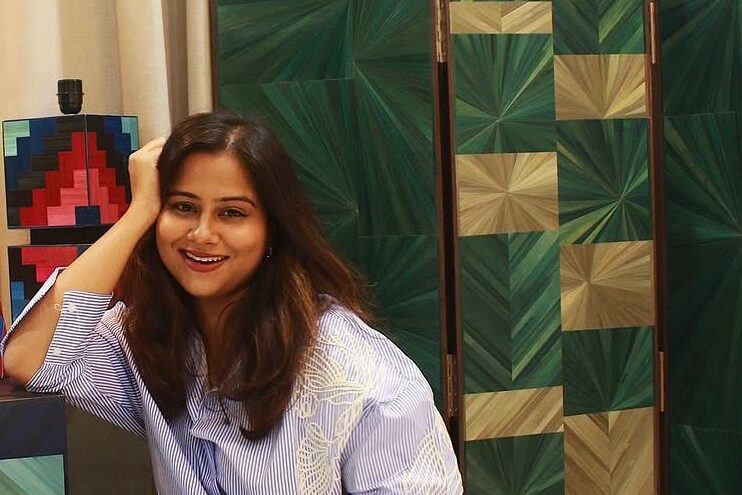
One of my favourite discoveries came from Aishwarya Sapkal of Mustard Design Studio.
Her work centres around straw obtained from the mustard plant, which she transposes onto a solid surface – as it transforms into unique straw marquetry. The material on the base board finds application on cabinet fronts, lamp bases, decorative panels, and wall art.
What fascinated me wasn’t merely the finished product but the thought process behind it.
Most of us think of the mustard plant only in terms of its seeds. Sapkal’s work asks us to reconsider what happens to the rest of the plant after harvest.
The resulting surfaces possess a warmth and texture that feels both contemporary and handcrafted. More importantly, they demonstrate how agricultural by-products can become design assets rather than waste.
Bamboo Beyond Stereotypes
Another familiar name in the Creative Minds section was Pravinsinh Solanki of NID Ahmedabad, whose work with bamboo I had previously encountered during a visit to NID as well as Ambiente 2019.

For many people, bamboo still carries associations of temporary structures, rural applications, or low-cost construction. Solanki’s work challenges these assumptions completely.
His designs demonstrate that bamboo can be sophisticated, refined, and contemporary without losing its identity. Rather than disguising the material, he celebrates its natural qualities. The result is work that feels both sustainable and timeless.
When Lighting Becomes Art
At Oddball Studio, Pune-based designer Shruti Ghuge presented a striking light installation that remained visually captivating even when switched off.
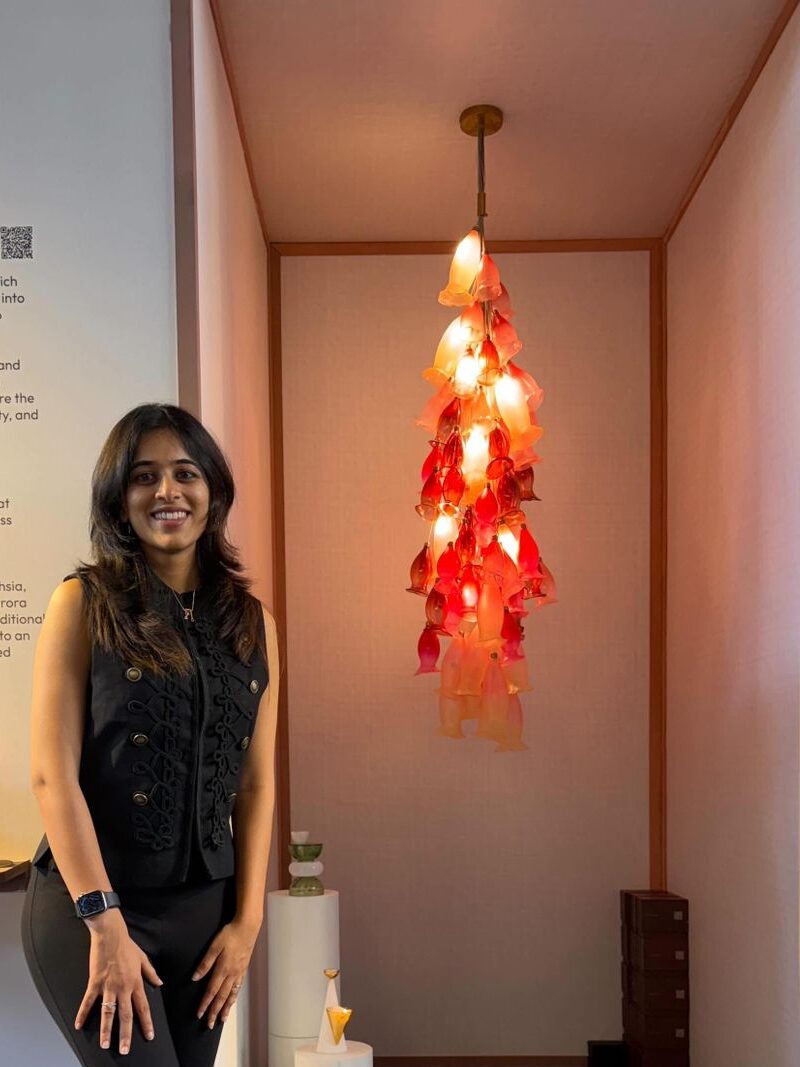
This may seem like a simple observation, but it speaks to a larger shift in lighting design.
Increasingly, lighting is expected to function as sculpture. The fixture is no longer merely a source of illumination; it is expected to contribute to the visual language of a space at all times.
Ghuge’s installation succeeded on both counts, commanding attention as an object while also performing its functional role.
Restoration as Circular Design
One of the most thought-provoking displays came from Purvai Shah Khinvasara of Eyes On That. Her focus is furniture restoration, and the pieces on display had been carefully restored and hand-painted to create an entirely new identity.
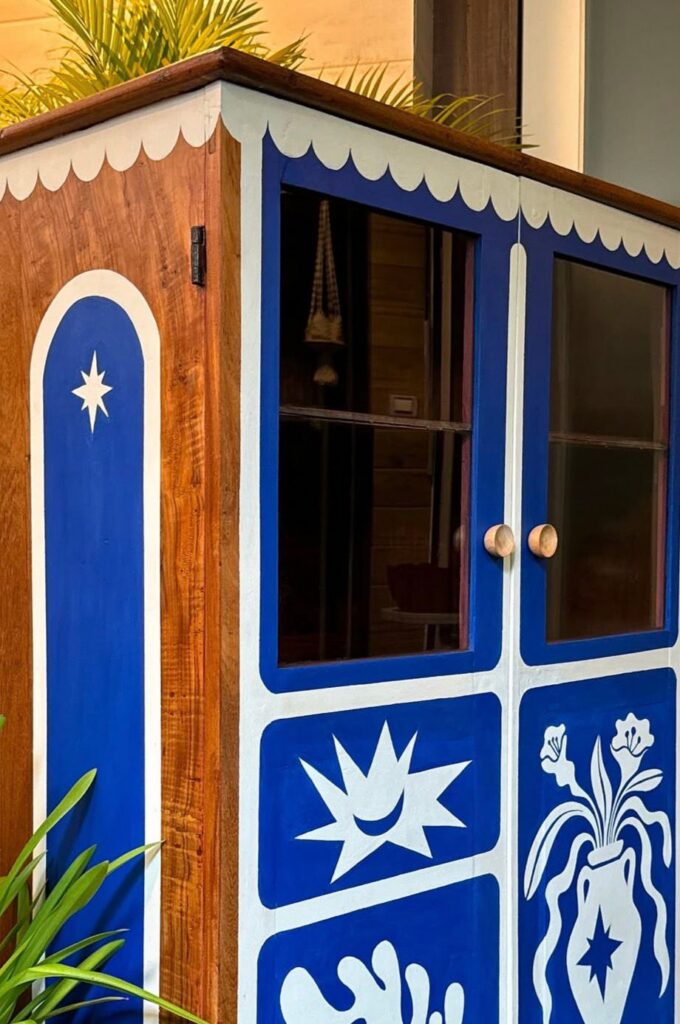
As someone who works with antiques myself, I must admit that my instinctive reaction is often one of caution whenever paint meets old wood. There is always a part of me that mourns the original finish. Yet standing before these pieces, I found myself appreciating a different perspective.
If a neglected piece of furniture can be given a second life, remain relevant in a contemporary home, and avoid ending up as scrap or firewood, that too is a form of preservation.
Perhaps not every antique needs to remain frozen in time. Perhaps some deserve a second chapter.
Material Storytelling Through Small Details
Kushal Shah of E9 Studio demonstrated how powerful material combinations can be.
A high chair featuring a circular marble insert with a brass inlay motif immediately caught my attention. The design wasn’t loud or complicated, yet the interaction between wood, stone, and metal created richness and depth. Equally memorable was a lampshade featuring tiny fireflies crafted from fabric scraps.
It was a small detail, but one that transformed discarded material into something magical. These were reminders that innovation doesn’t always come from entirely new materials. Sometimes it comes from seeing existing materials with fresh eyes.
Material Innovation at Scale
While Creative Minds explored materials as a medium for experimentation, the Brand Gallery revealed how material innovation is entering mainstream interiors.
Stone as an accessory medium
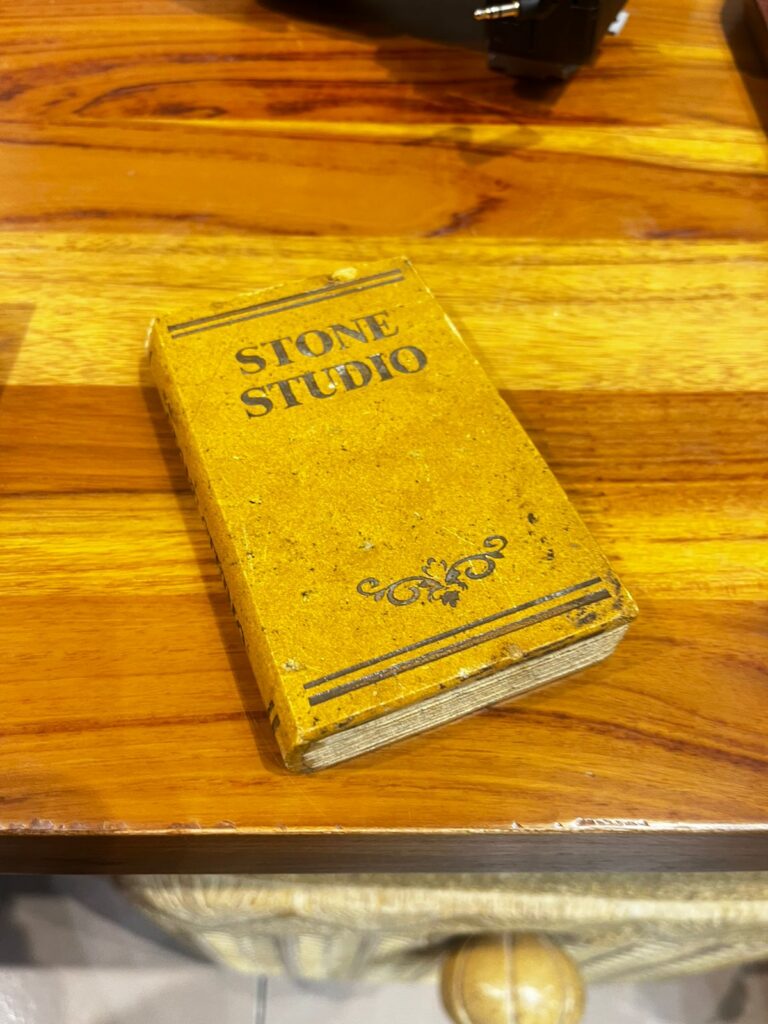
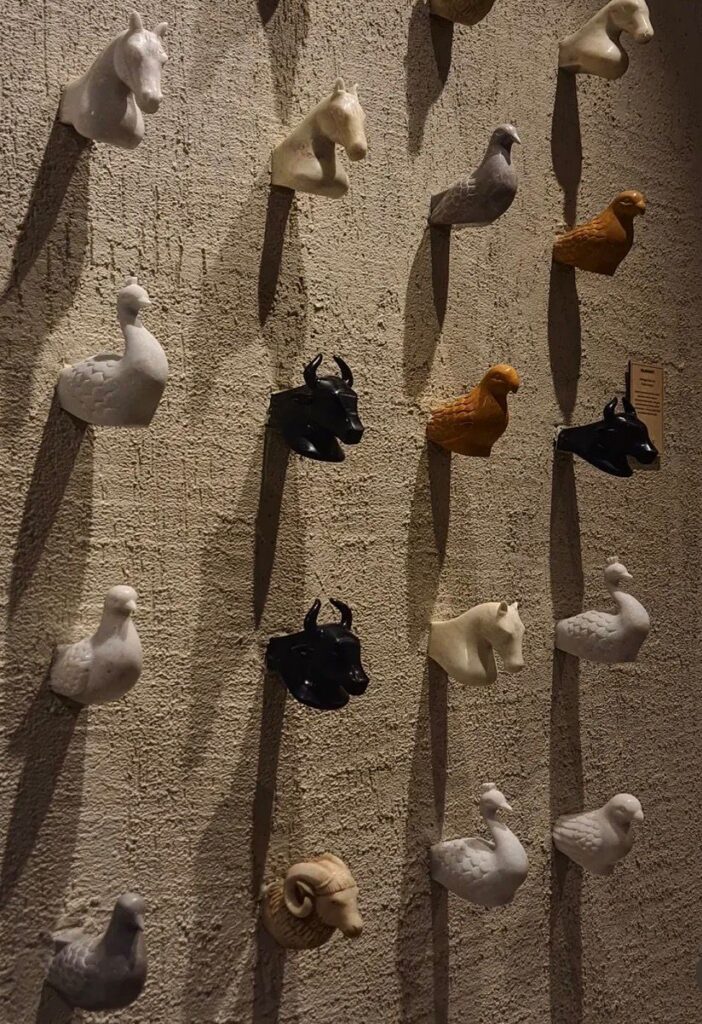
Stone Studio had the most stunning products. With a focus on integrating stone with cultural elements such as old village implements and pots, creating something unique and stunning each time.
Relwood: Rethinking Timber
Among the strongest material stories at the event was Relwood. Their wood-like material derived from rice husk immediately stood out.
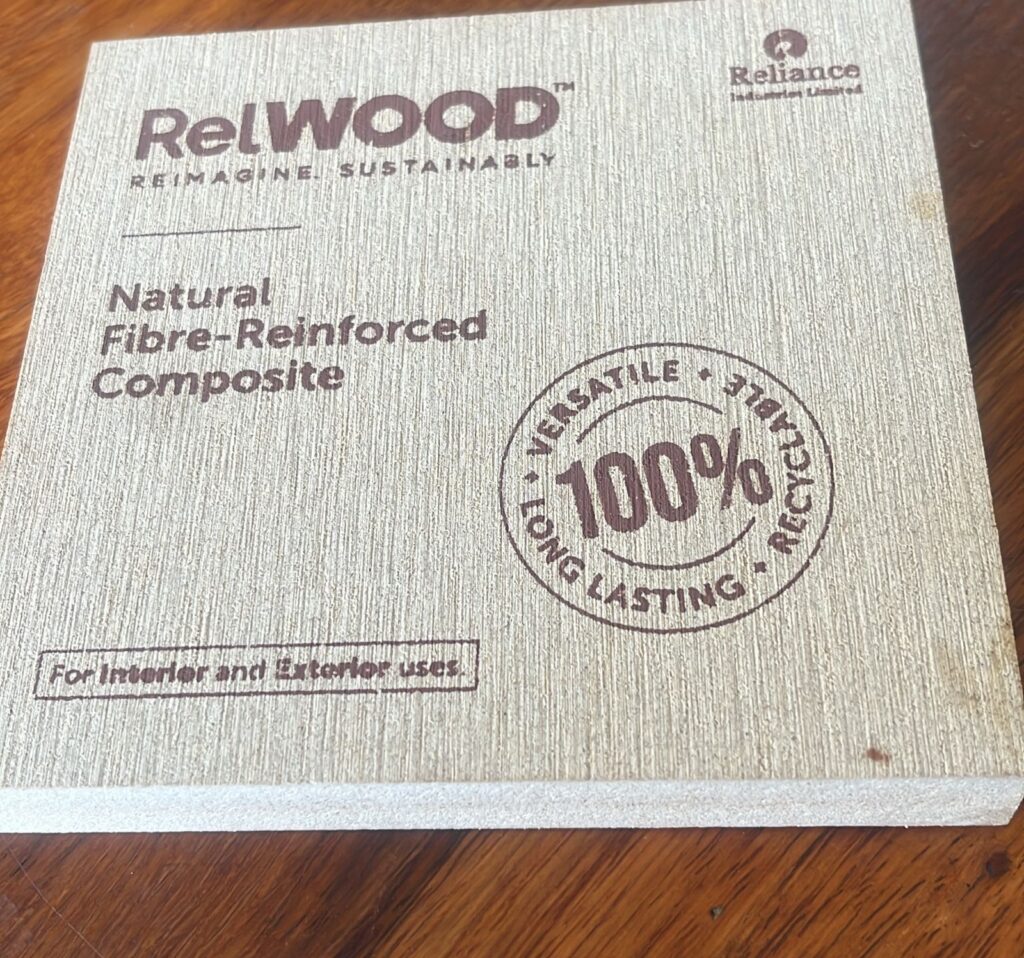
As pressure grows on natural timber resources, products that utilise agricultural residue offer an intriguing alternative. What impressed me most was that the material did not feel like a compromise. It felt like a legitimate design material capable of standing on its own merits.
It was one of those exhibits that made me stop and think about where the future of surface materials might be heading.
Invisel: The Invisible Innovation
One of the most interesting products at the show wasn’t visible at all. Invisel showcased nano coatings designed for a variety of surfaces, from upholstery and countertops to bathroom fixtures.
For anyone living in Indian cities where hard water stains are a constant battle, the potential applications were immediately apparent. It was a reminder that material innovation is not always about aesthetics. Sometimes it is about performance, maintenance, and longevity.
Themes Home: Material Exploration Through Surfaces
Themes Home impressed me with the sheer variety of ideas presented through curtains, wallpapers, and textured surfaces.
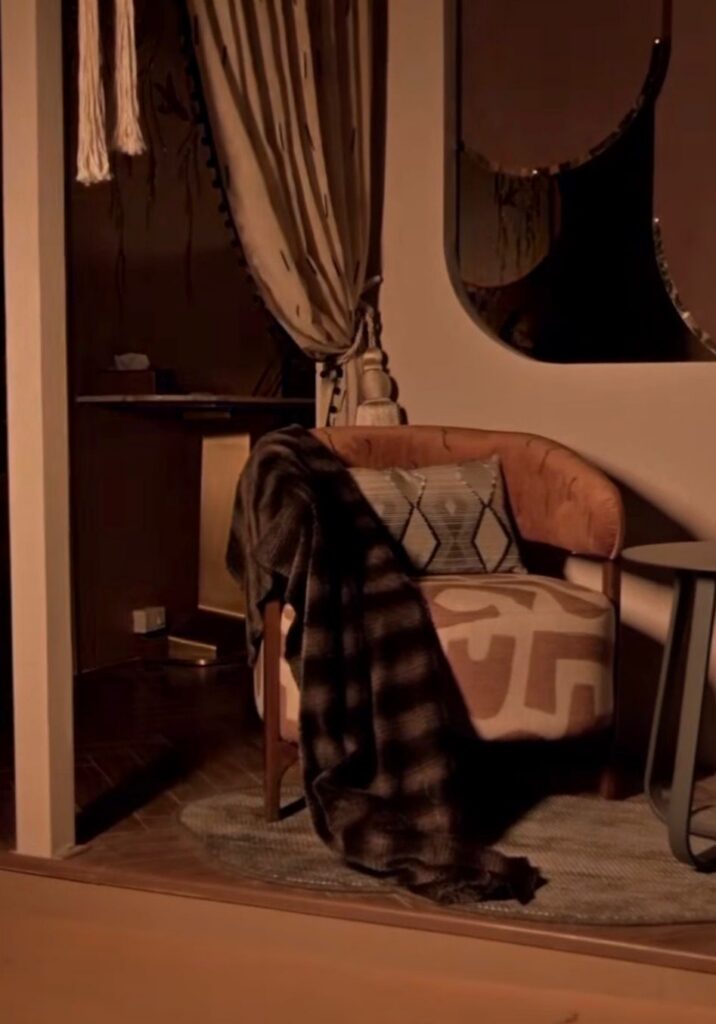
Rather than focusing on a single product category, the display demonstrated how surface treatments can dramatically influence the character of a space.
It was an efficient and inspiring showcase of material possibilities for contemporary interiors.
House of Grava: Making Marble Feel Weightless
If there was one exhibit that truly surprised me, it was House of Grava’s Taral collection.
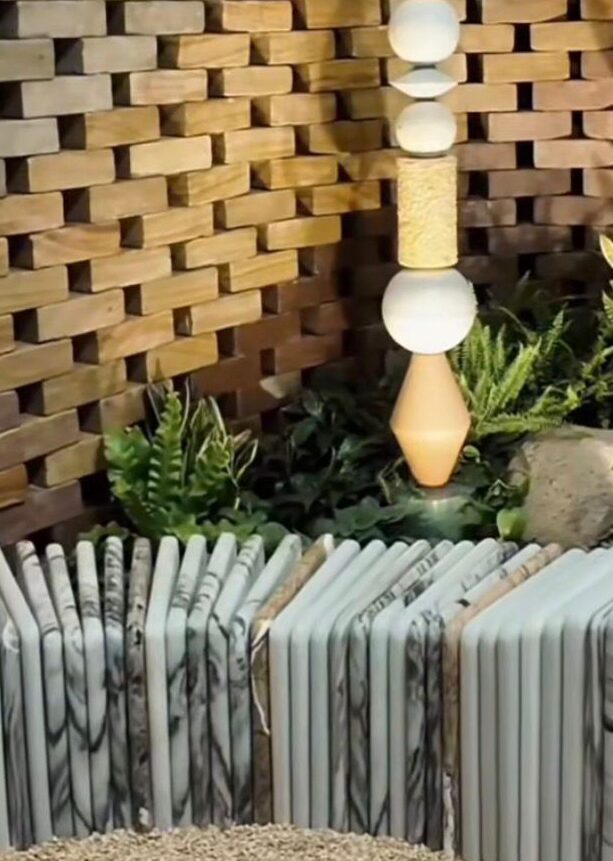
Using thin slices of marble assembled into organic forms, the studio transformed one of architecture’s heaviest materials into something that appeared fluid and delicate.
The installations occupied a fascinating territory between sculpture, architecture, and landscape art.
It challenged my own assumptions about stone and what it can become.
Once Upon a Fairy Light: Ceramic Meets Glass
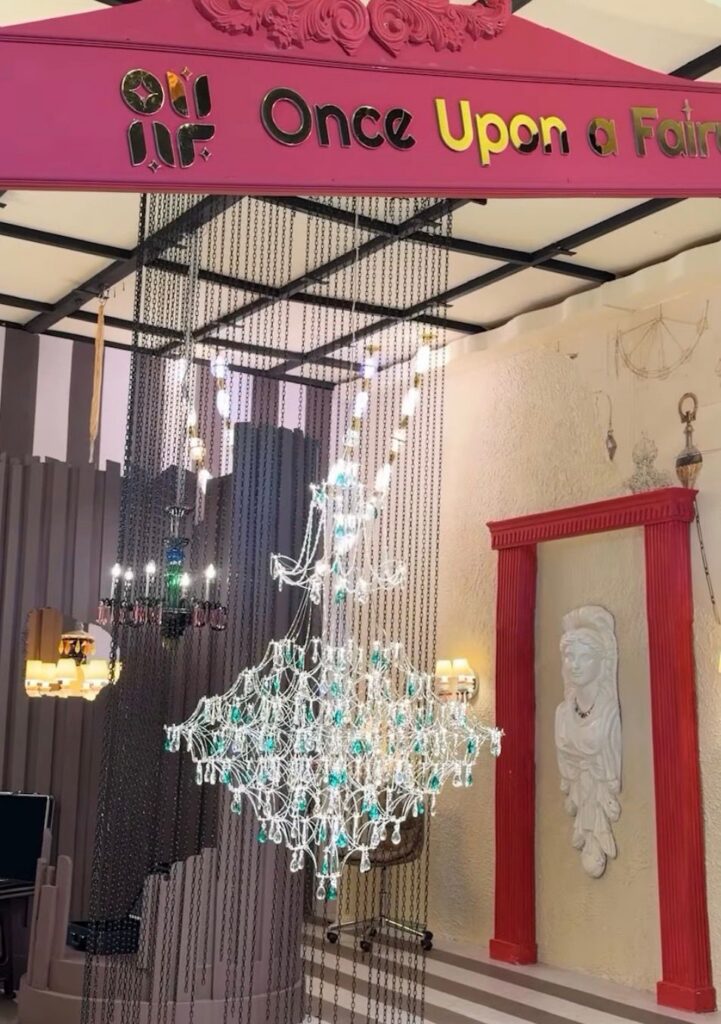
At Once Upon a Fairy Light, handcrafted and molded ceramic elements were mounted onto glass chandelier stems to create decorative lighting that felt whimsical and deeply personal.
The combination of materials introduced texture, individuality, and craft into a category often dominated by mass-produced fixtures.
Neptune: Functional Objects with Character
Neptune’s resin planters also caught my attention, particularly a collection incorporating integrated LED lighting. By day they functioned as planters.
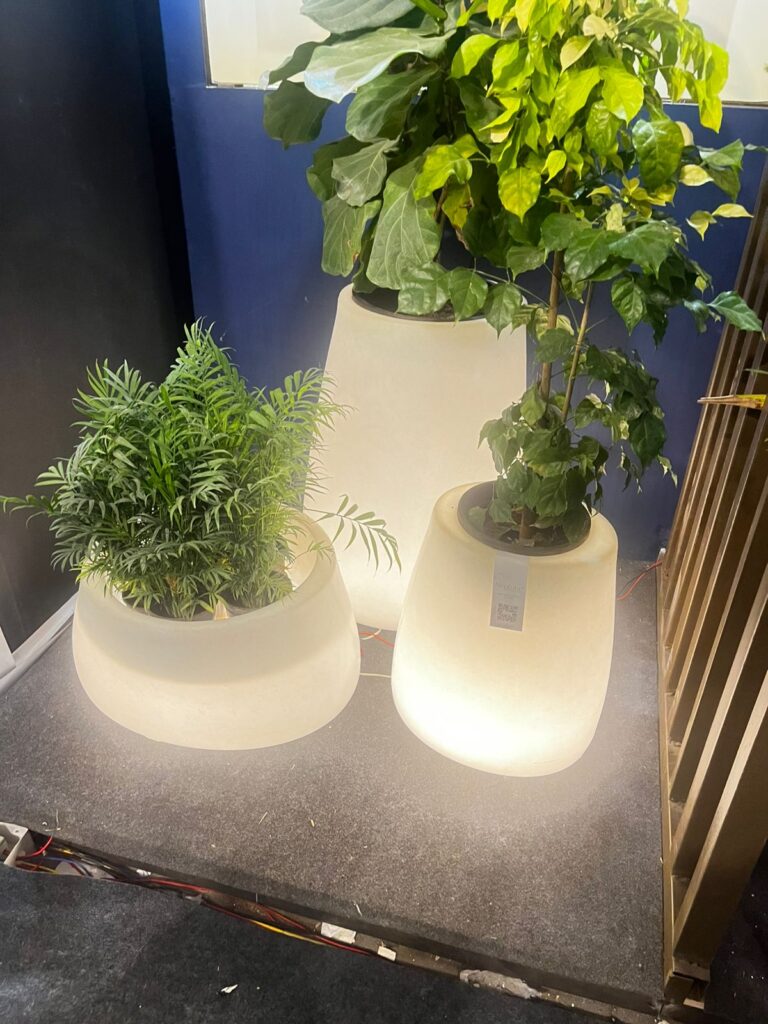
By night they transformed into illuminated sculptural elements. The result was both practical and atmospheric.
Pune Haat had its own Material stories too.
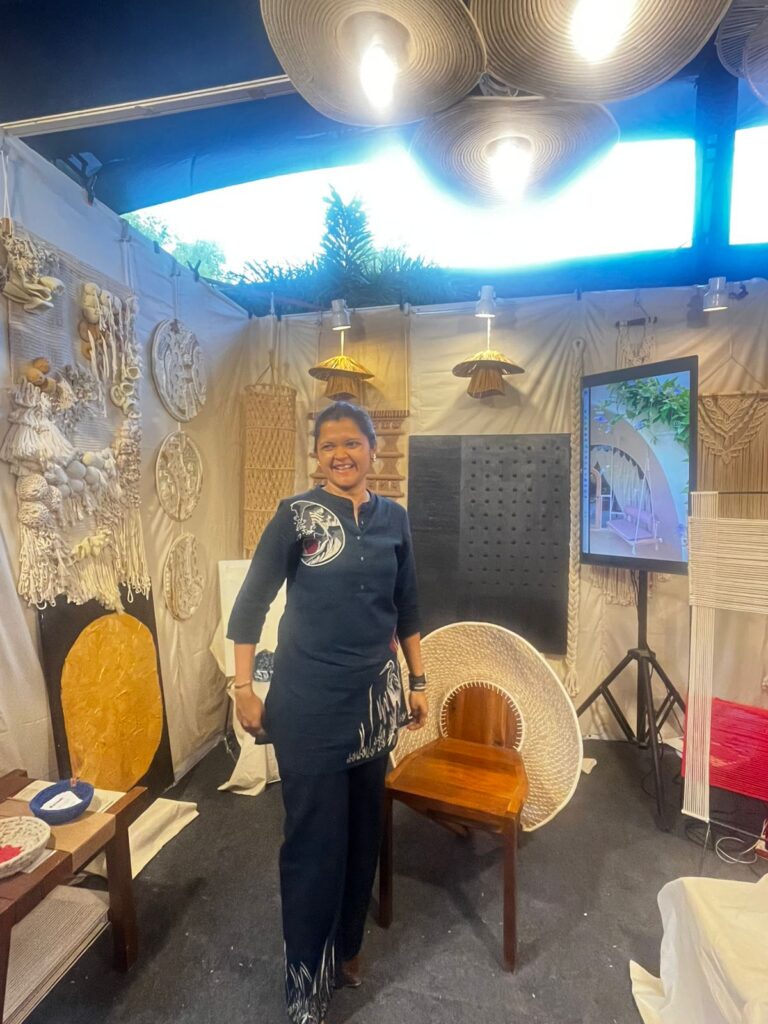
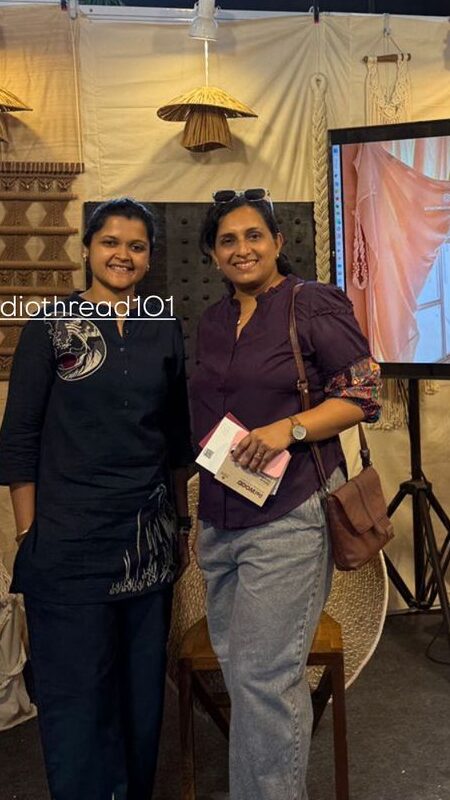
Pune Haat was a heartwarming experience. It was cocooned within Pune Design Show celebrating regional artists (a dear friend was a participant too) and these brands were all about Cultural continuity, Regional identity, Handmade value and Preservation through commerce. Materials ranged from Studio Thread 101’s Macrame and handmade creations – sustainable, focused on women empowerment, and best of all, completely washable! A winning product line if you ask me!
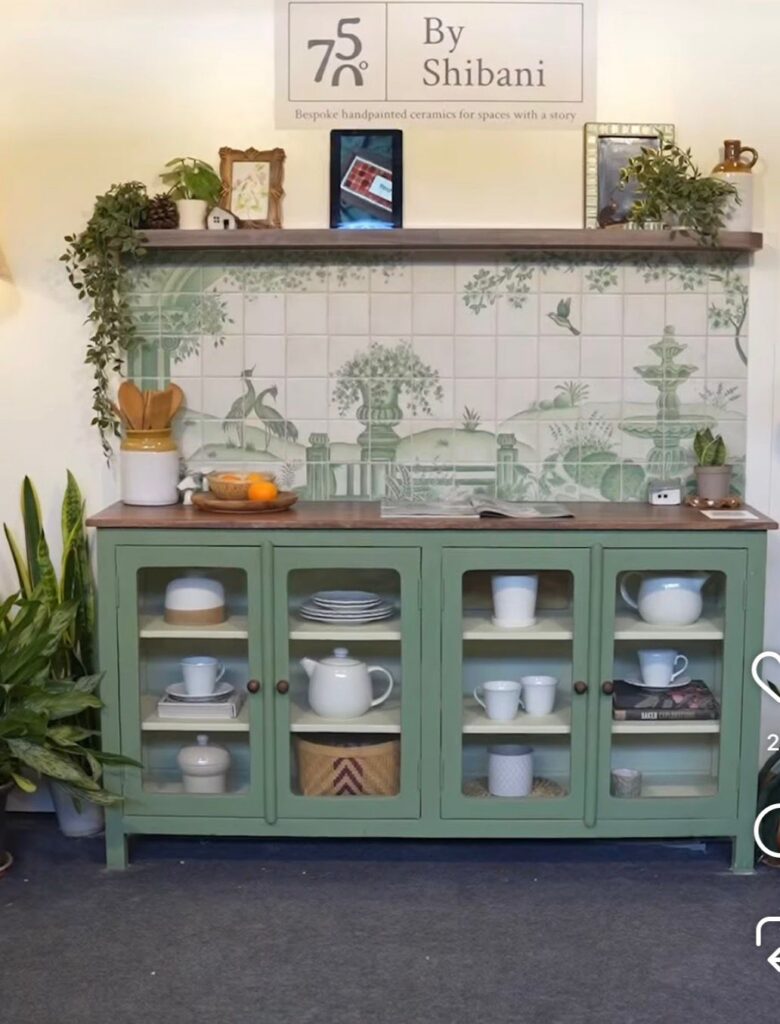
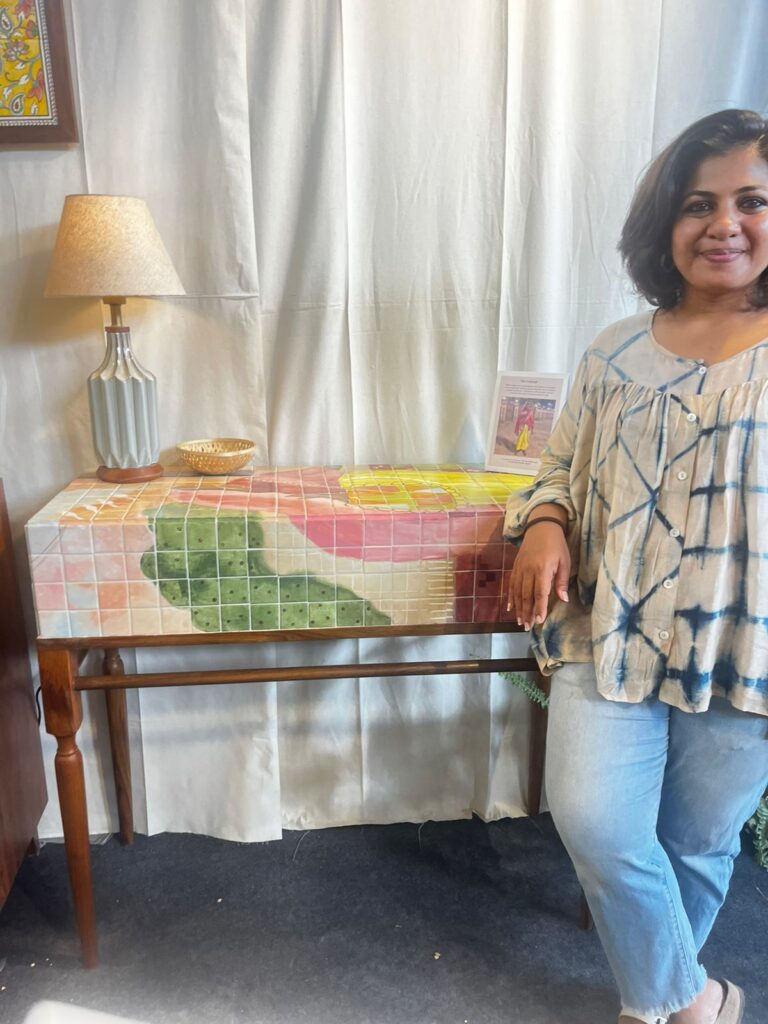
By Shibani, an instagram favourite of many – stunned me with her console table inspired by a piece of art. Her medium is tiles, and her signature work is the handpainted designs on her tiles. A lovely, homegrown concept, that’s catching the eye of celebrities and designers!
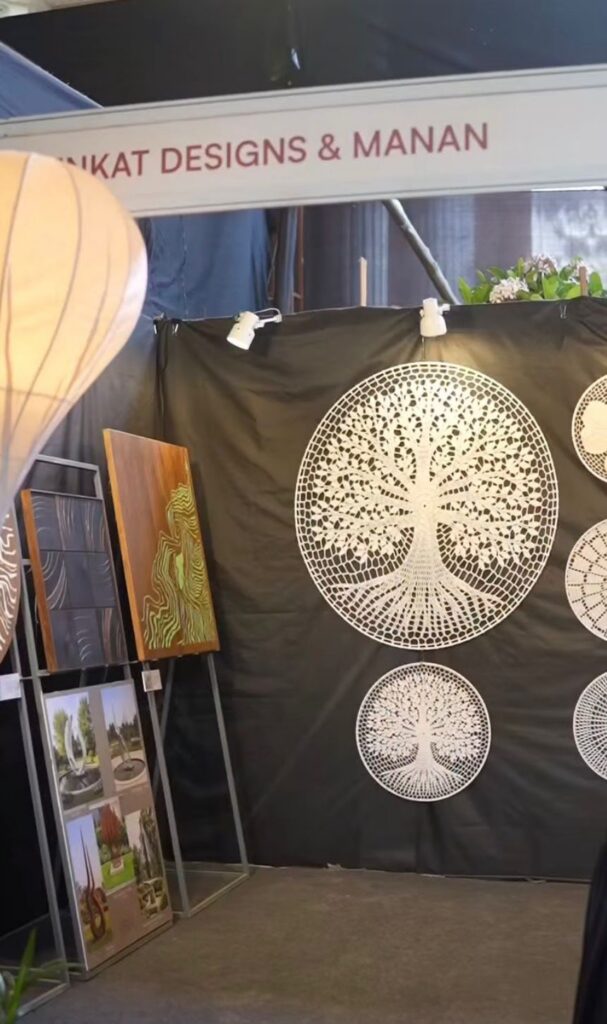
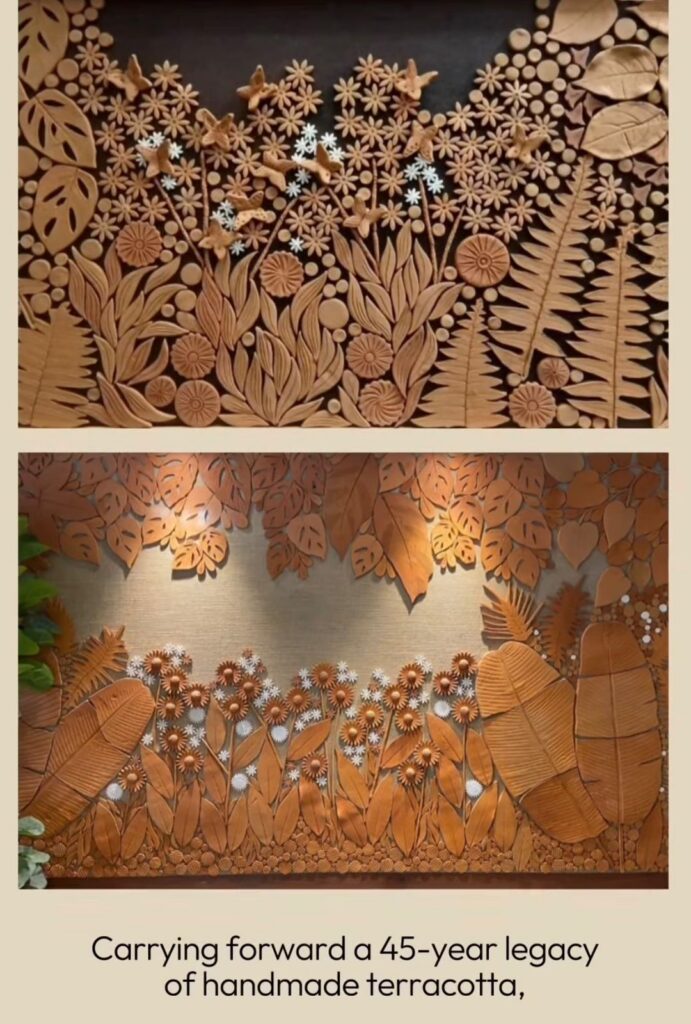
I loved that Tanvi Bamb had the most charming textiles transformed into useable art! Her wall pieces were truly stunning! Rajashree Dadarkar, carrying forward a long career with her stained glass work, and terracotta embellished paintings, caught my eye, for her sustained use of these materials in different ways, over the years!
I was also charmed by the very useable everyday and playful decor accents presented by Co-ordinates. Their stall made me want to linger, eyes resting on each unique piece, a big smile pasted on my face!
The Material Story Behind Pune Design Show
As I reflected on the event afterwards, I realised that the most memorable exhibits all shared a common thread. They began with a question. What if mustard straw could become decorative art? What if bamboo could become contemporary luxury? What if discarded furniture deserved another life? What if rice husk could replace timber? What if stone could feel light?
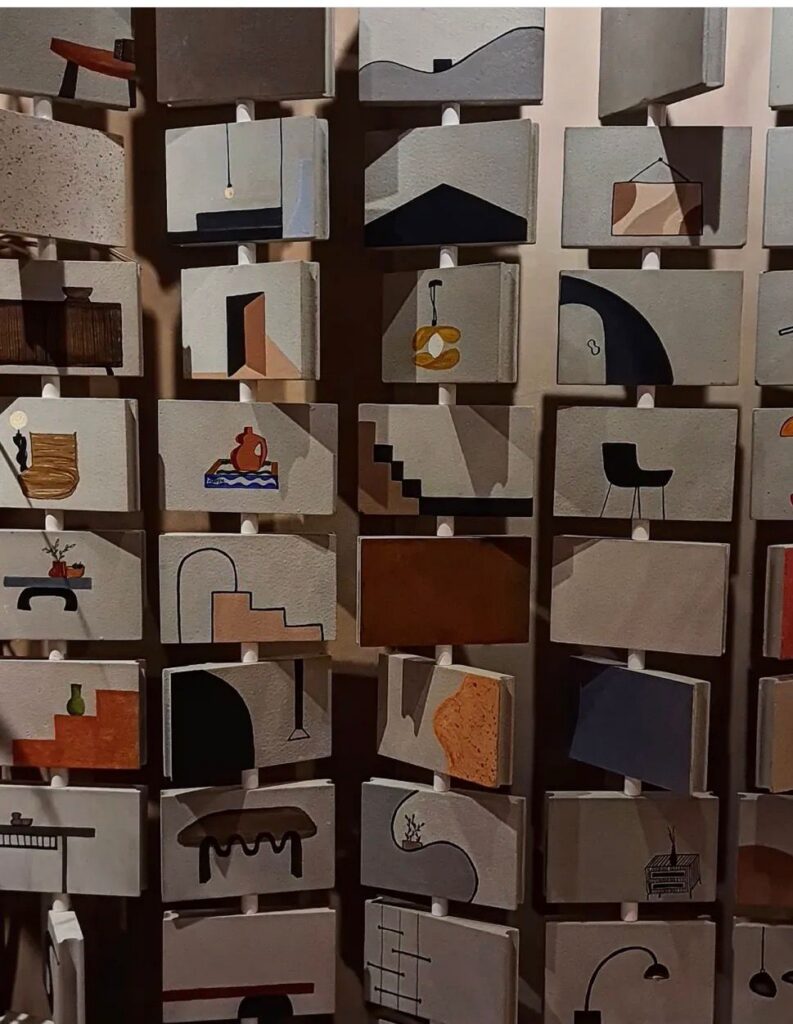
What if fabric scraps could become fireflies? For me, this was the true meaning of Pause : Think.
The exhibitors who left the strongest impression were not necessarily the ones with the biggest displays or the most dramatic products. They were the ones who paused long enough to question the materials we take for granted and imagined new possibilities for them. I tip my hat to the curators, because they truly worked with the theme in mind. Pause:Think truly made visitors do just that.
In a world obsessed with creating something new, Pune Design Show offered a refreshing reminder that innovation often begins by looking more carefully at what is already around us.
Check out more at their official website The Pune Design Show 2026 |
If you have been featured here, kindly comment with your social media handles so that my audience can find you in case something here makes sense for their homes or projects.
In case you want to check out more exhibition or design news on this blog, stay tuned. We are bringing out a lot more design news in the coming months.