Looking at craft, sustainability, materials and the afterlife of objects through Design Democracy 2026.
I have always thought of design fairs as places to go looking for something new. A new material. A clever piece of furniture. A designer you haven’t heard of. Something that makes you stop and think, Why didn’t I think of that?
But while looking through the programme and speaking to some of the people involved in Design Democracy 2026, I found myself thinking about something slightly different.
What happens when a design fair starts asking what is worth carrying forward?
The fourth edition of Design Democracy, held at Hyderabad’s HITEX Exhibition Centre from September 18 to 20, brought together more than 200 exhibitors alongside curated exhibitions and installations looking at sustainability, regional knowledge, textiles, craft and the life of objects after their newness has worn off. (Design Democracy 2026). I wasn’t at the fair myself, so this isn’t a report from the exhibition floor. But the conversations and material around this edition have given me enough to think about what seems to be changing in the way Indian design is being discussed.
And perhaps the most interesting part is that several very different projects were asking versions of the same question: What do we keep, what do we change, and how do we know the difference?
Craft doesn’t necessarily have to become contemporary
We often talk about bringing traditional Indian craft into contemporary design as though the craft itself has to change. Change the colours. Simplify the form. Put the technique on a piece of furniture. Give it a minimalist setting. Make it look less “traditional”.
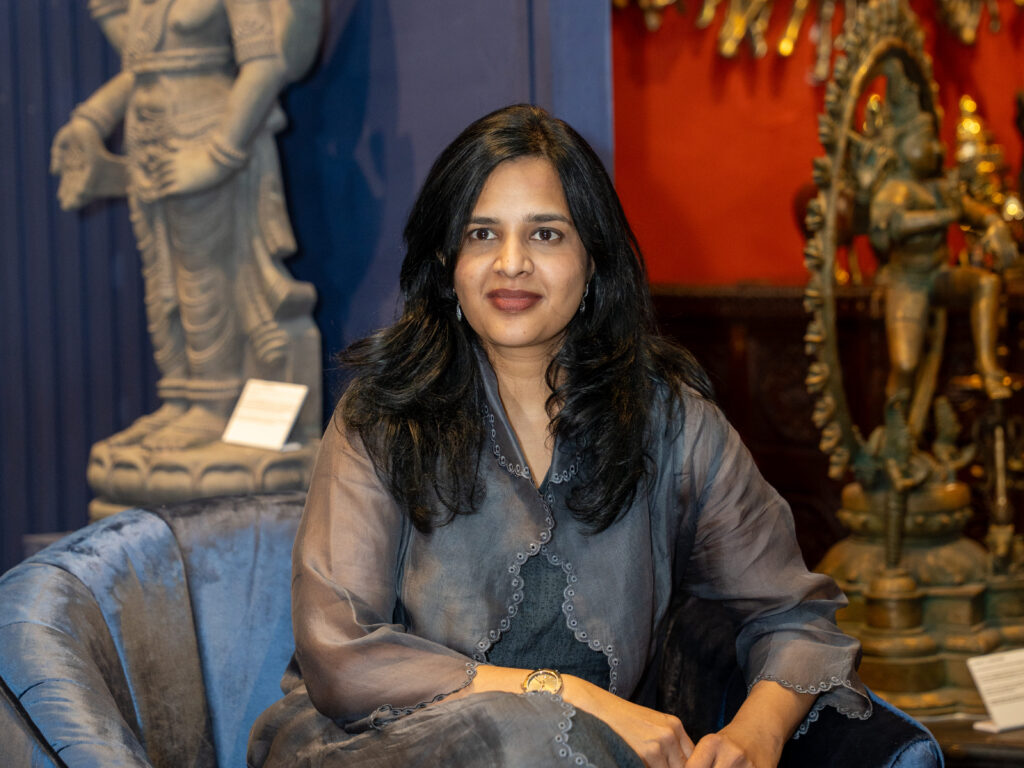
But Spurthi of The Artisania made an argument that I found much more interesting when we spoke about their Design Democracy installation, The Cosmos. She is very open to evolution, she told me, but not dilution. For her, the process that gives a craft its identity is not something to be altered simply to make it faster or easier. Context, scale, presentation and use can change; the integrity of the process should remain. That distinction matters.
We assume that for a Pichwai, a Tanjore or a Gond painting to belong in a contemporary home, it has to be made to look contemporary. Spurthi’s view is almost the opposite. A Pichwai can remain a Pichwai. A Tanjore can remain a Tanjore. What may need to change is our perception of them, not necessarily the work itself.
Perhaps contemporary design doesn’t need to reinvent traditional craft. It just needs room to grow.
There’s another kind of evolution in design
The Museum of Telangana’s 2026 edition looked at timber, bringing together Telangana-based studios around the material. What interested me was the distinction curator Supraja Rao made between reproducing traditional furniture and continuing the knowledge behind it. Joinery, proportion, grain and craftsmanship are being reinterpreted through contemporary design rather than simply copied from the past. (Design Democracy 2026)
As someone who looks at old wood every single day (I am an antique dealer by profession), I understand. Evolving wrt to craft means one can change the object. One can also continue the old knowledge, if it is more sophisticated, more lasting and proven. We moved from beautiful sophisticated joinery to nails and bolts only because we wanted to produce faster. But we ended up spoiling tried and tested, something far more superior.
Heritage is not just preservation. It is also a body of knowledge that can continue to generate new things.
The artisan has to remain part of the story
For Spurthi, living heritage begins with the artist. The person carrying the knowledge cannot disappear behind the finished object. That was also why the live potter in Bhoomi, one of the three worlds in The Cosmos, was important to her. Visitors were treated to not just a finished pot, but the hand, material, decisions, patience and skill involved in making it.
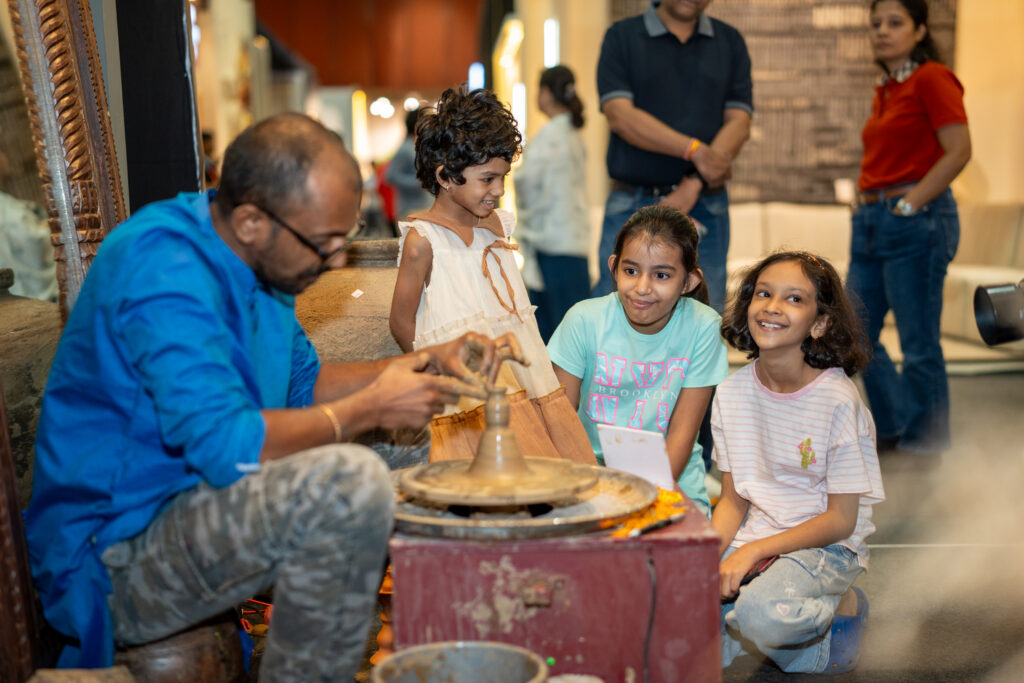
I like this idea because we see finished pieces everywhere. But when we are shown a work in progress, everything seemsso real, like we are behind the scenes too. Like somehow, instead of just being observers at a design fair, we are participating!
A learning here is that if we are serious about keeping traditional skills alive, perhaps the maker needs to become more visible, not less.
Because preservation is also an economic question
This is where the conversation becomes less romantic. Spurthi told me that many of the younger artists she works with had moved away from inherited crafts; because traditional craftsmanship was not necessarily seen as aspirational or economically viable. She sees the growing interest in Indian art and craft as creating a new audience — and therefore the possibility of a livelihood and a future for the next generation.
For all this, the craft has to be viable. That is where contemporary design can play a meaningful role: not necessarily by changing the craft, but by changing its place in the market and in people’s lives.
Sustainability has a similar problem
The same question of what we keep and what we change appears in another part of Design Democracy — the Gallery of Sustainability and its Root & Radiance exhibition.
The exhibition brought together 20 contributors around a deliberately difficult question: can an object be beautiful, high-performing and genuinely sustainable at the same time? Its curatorial approach included mechanical assembly, repairability and replaceability, while avoiding virgin materials, glue and chemical resins. (Design Democracy 2026)
But my conversation with Dr Rebecca Reubens of Rhizome made me question the word sustainable itself. Rebecca’s point was that a material cannot simply be declared sustainable and left at that.
Natural dyes are a good example. A natural material may seem like the obvious sustainable choice, but if demand suddenly grows beyond what can be produced responsibly, the equation changes. Dr Reubens cites the example of natural dyes. Something can be sustainable at one scale and not at another.
She also made a point that hit deep; if a client already owns a perfectly usable material that doesn’t fit today’s definition of sustainable, replacing it simply to buy something labelled sustainable may make little environmental sense. She told me that sometimes the sustainable decision is to use what already exists. And yes, that is true. I remember that before tissues, milk packets, etc came to Indian markets, we were already sustainable. We regressed from milk bottles to milk packets, from handkerchiefs to use and throw tissues.
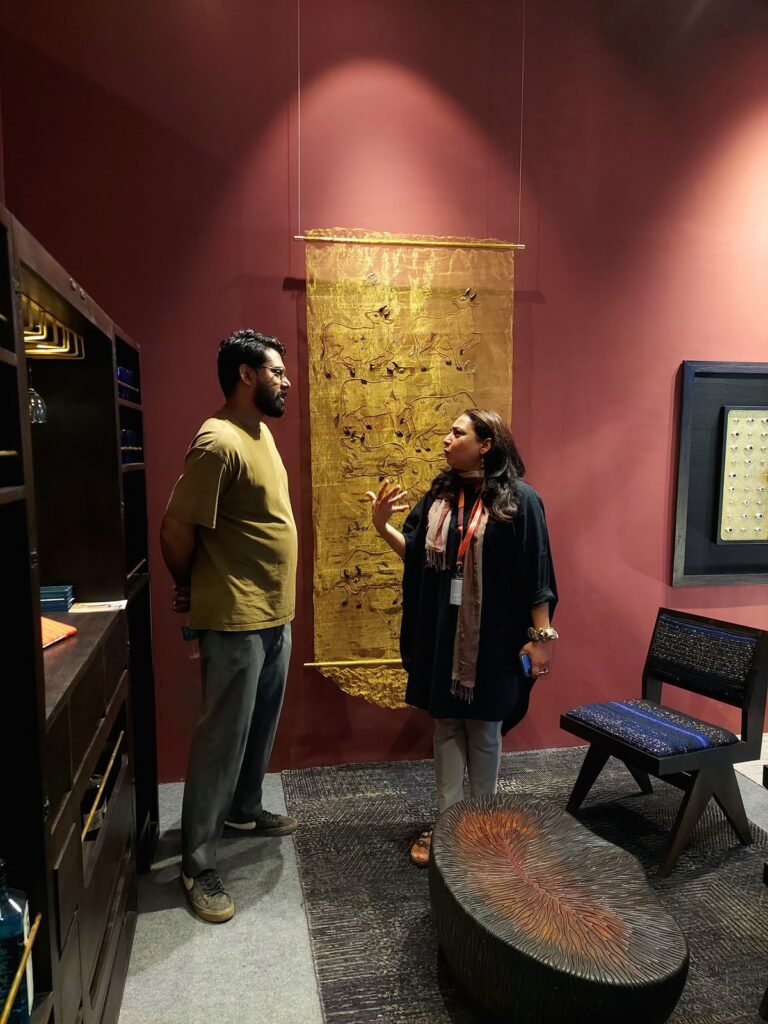
That is a very different proposition from sustainability as a shopping category. Rhizome’s own framework describes sustainability as something that has to be considered across social, cultural, ecological and economic systems rather than treated as an aesthetic or certification. (Rhizome)
The harder question is what happens when you look at the entire system. This is where my conversation with Dr Rebecca Reubens of Rhizome made me stop and think. Sustainability has become such an easy word in design that we sometimes use it without asking what we actually mean by it. Rebecca’s argument is that no material can simply be labelled sustainable. It depends on how it is sourced, produced, used, scaled and eventually discarded.
She also said that if a client already has perfectly usable plywood in an interior, replacing it simply because plywood isn’t considered a sustainable material may make little environmental sense. Sometimes the more sustainable decision is to use what already exists.
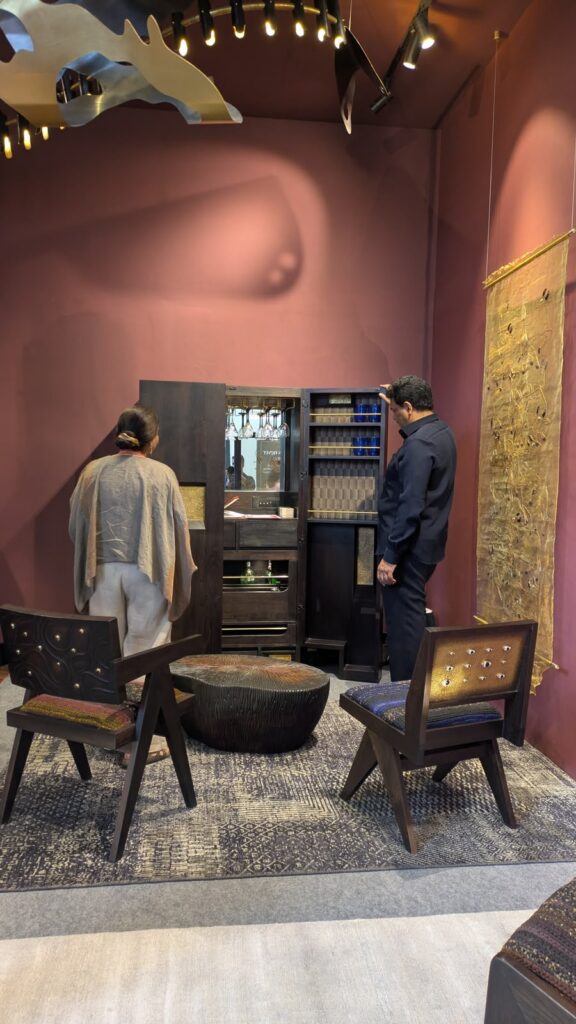
That shifts the conversation completely. Sustainability isn’t always about choosing the “right” new material. Sometimes it is about extending the life of the material we already have.
And Rebecca questions something else: why does sustainability have to be sold as a feature at all? If it is genuinely built into the way a company designs, sources and makes its products, perhaps it should simply be the way the company operates.
That is a much harder standard than putting sustainable on a product label. It asks us to look beyond the material and ask: Where did it come from? How was it made? How long will it last? Can it be repaired? What happens when we no longer want it?
And that is why I found Root & Radiance, the sustainability exhibition at Design Democracy, particularly interesting. Its curatorial approach looks at mechanical assembly, repair, replacement and end-of-life rather than treating sustainability as simply a choice of material.
Now that leaves me asking, “Where, exactly, does sustainability enter the life of this object?”
What happens when we stop wanting the object?
This is where After Life, the Precious Objects exhibition curated by Monika and Sarah Choudhary of Habitat Architects, becomes interesting.
Its premise was simple: what remains of an object once desire has moved on? (Design Democracy 2026)
That question interests me particularly because I work with antiques. Objects survive for all sorts of reasons. Someone valued the material. Someone repaired it instead of throwing it away. Someone attached a memory to it. Someone thought it was too well made to discard. Sometimes it simply remained useful.
And suddenly I think, no. I know now that sustainability in design is partly about designing things people will actually want to keep. Newness is not necessarily what makes an object last.While we are very serious now about using the ‘right’ material, designers and manufacturers should perhaps seriously ask why someone would still want the object twenty years later.
So what does all this say about Indian design?
I don’t think it tells us that Indian design has suddenly become sustainable, or that craft is being successfully preserved, or that designers have solved the complicated relationship between tradition and contemporary life.
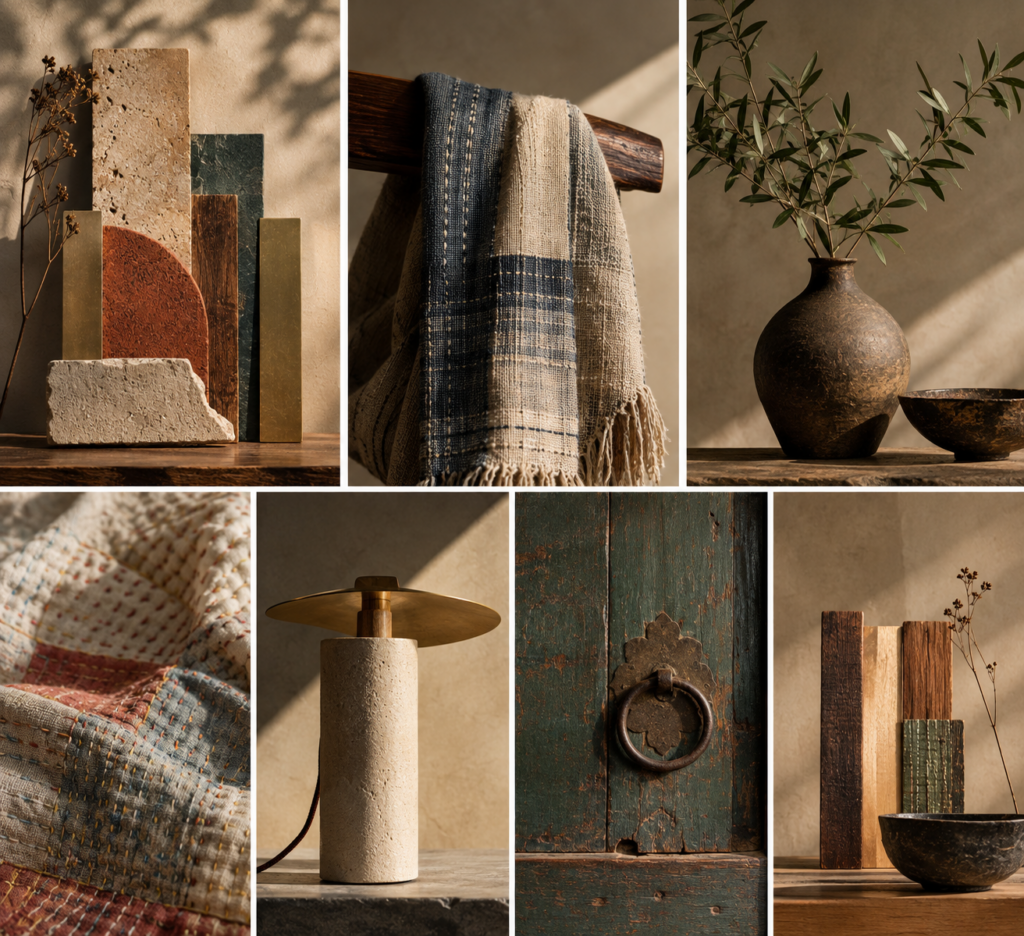
What I do think is interesting is the direction of the questions.
What is worth keeping?
Pertinent questions rise up in my head. What is worth changing? What knowledge should travel into the future? What should be left alone? When does innovation give a craft another generation? When does it strip away the thing that made the craft worth preserving? And when we call something sustainable, are we talking about a material, an object, a process, a business model — or the entire life of the thing?
Let’s think! 🙂
Looking for more design stories? Browse through our blog. or click here.
You could also check our home tours. We haven’t done any recently, and would love to feature an interesting home.